
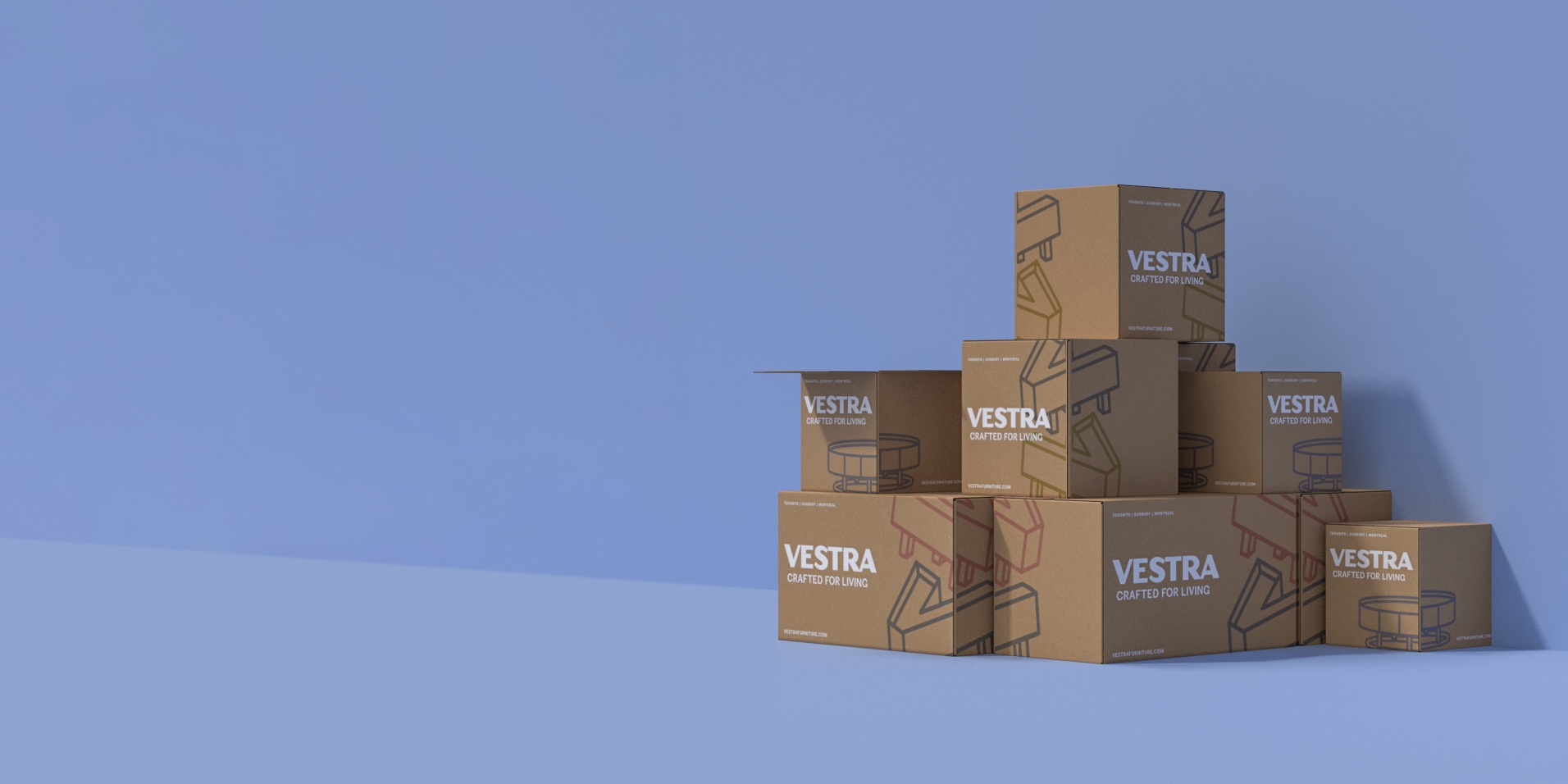
This might seem like a silly question–but what is cardboard? In this post, we answer the question of what this material is, from its composition, uses, and the different types you can use.
Read on to learn more!
Cardboard Composition
Cardboard, like regular paper begins as wood pulp. While paper and paper board are single sheets (of various thicknesses), cardboard is made of multiple layers. There are three main components in a piece of cardboard: a top liner, corrugated board, and a bottom liner.

Why Corrugation?
If cardboard is just layers of paper, then why do we need corrugation? On their own, flat sheets don’t distribute weight as easily. When you look at a cross-section of cardboard, you can see it looks like a group of small triangles, which distribute weight better than flat lines. If you look at the image below, you can see how a triangle distributes weight across its three sides!

Sandwiching the corrugated piece between two flat liners enhances the strength of the triangles by creating a truss! The trusses can distribute more tension than standalone triangles can, making for a stronger, more durable structure that’s perfect for packaging.

There are different levels of corrugation, which provide various thicknesses and rigidities. These levels are called flutes, referring to the channels created by the corrugation. Here at LeKAC, our most popular flute styles are B-flute and E-flute!

Uses
As an added bonus to being durable, cardboard is also lightweight! The corrugation adds an extra layer of protection, especially for fragile items. This extra protection makes the material ideal for shipping, as well as packaging fragile items.
Sending boxes made from this material through the postal system isn’t the only way you can use it! Many retail packaging solutions also utilize cardboard for added support and stability.
Not sure how this material can work for your business? Contact us today for a free consultation with one of our knowledgeable Business Development consultants!







1 Comment