The food and beverage industry is a major source of packaging waste – from single-use plastic bottles, to multilayered snack wrappers. Consumers are becoming more and more aware of the environmental impact and demanding change. This shift presents challenges and opportunities alike for brands to utilise sustainable packaging solutions.
In this guide, we’ll explore eco-friendly packaging options that are currently popular, packaging trends to look out for, and the importance of sustainability in the industry.
Trash Talk: The Truth about Packaging
Sustainability in the food and beverage industry is no longer a niche concern. Businesses are under immense pressure to reduce their negative environmental impact with thoughtful, sustainable packaging solutions for their goods. Traditional single-use packaging contributes significantly to pollution, landfill waste, and resource depletion – sustainable alternatives help minimise this damage.
Consumers are now actively seeking and favouring brands that demonstrate environmental responsibility, which in turn impacts brand reputation and long-term viability. While it may be necessary to individually package goods within this industry for safety reasons, that doesn’t mean the alternatives cannot be eco-friendly.
With governments worldwide introducing stricter regulations surrounding packaging waste, it’s the perfect opportunity to jump on board and upgrade your packaging. Sustainable packaging helps conserve resources, reduces costs in the long run, and ensures the industry’s continued operation.
Unboxing the Eco-Options: Standard Packaging
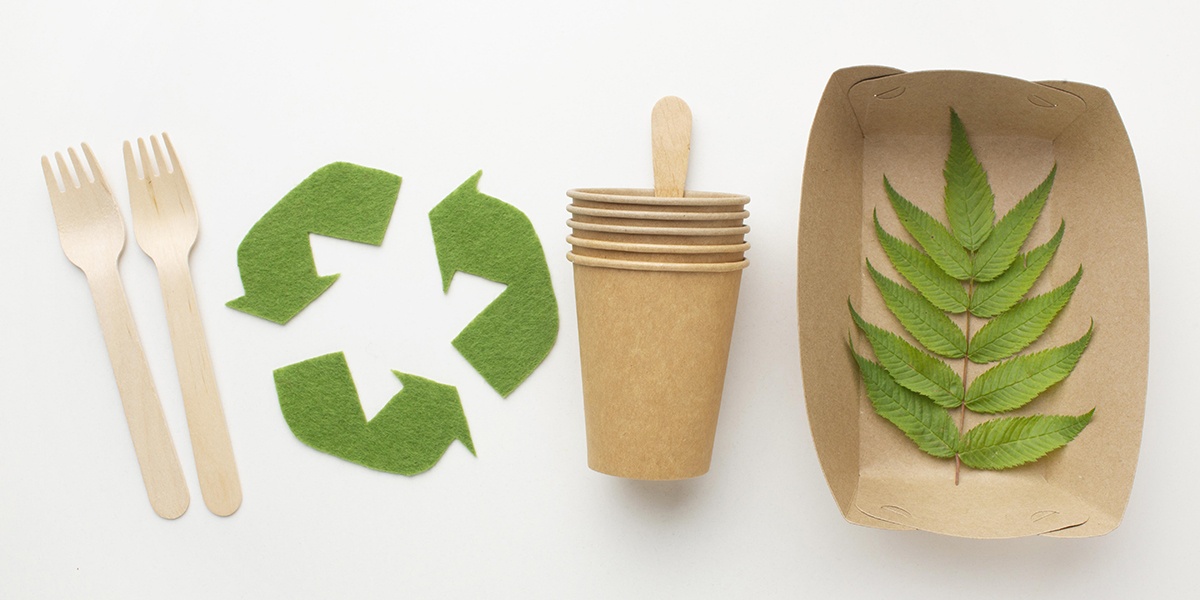
Fortunately, the packaging sector has grown to accommodate the quickly changing and rising needs of the food and beverage industry. There is a growing array of sustainable packaging solutions:
Biodegradable Packaging – made from materials that decompose naturally, such as plant-based plastics (PLA) or mushroom packaging
Compostable Packaging – similar to biodegradable packaging but does require specific composting conditions to break down fully, leaving no toxic residue.
Recycled Content Packaging – utilising materials like recycled PET (rPET) or post-consumer recycled paper reduces the need for virgin resources
Reduced Packaging – minimising packaging altogether, such as using less material or eliminating unnecessary layers
Plantable Packaging – innovative packaging embedded with seeds that can be planted after use. This is especially popular with wildflower seeds local to the business’ region!
Future Forward: Hot Trends in the Industry
Bioplastics – derived from renewable sources such as cornstarch or sugarcane, bioplastics offer a lower carbon footprint
Edible Packaging – imagine eating your packaging? This is a truly innovative approach where the packaging itself is edible along with the food or beverage it’s protecting. Researchers are constantly developing new forms of edible packaging using various materials, including milk protein films, fruit and vegetable purees, and algae-based materials.
Water-Soluble Films – packaging that dissolves in water, ideal for single-serve products. These films are made from materials like polyvinyl alcohol (PVA), cellulose derivates (derived from plant cell walls), and starches and sugars which are other natural water-soluble substances.
Minimalist Designs – emphasising simplicity and reducing material use through efficient packaging design
How to Greenify Your Packaging
Assess Current Packaging – identify areas where you can switch to more sustainable alternatives; maybe it’s not about your primary component, but about the accessories!
Partner with Sustainable Suppliers – work with packaging providers like LeKAC who commit to eco-friendly practices.
Educate Consumers – clearly communicate your sustainability efforts on your packaging and marketing materials; you can even let the consumer know how to recycle their packaging when they’re done on the packaging itself!
Explore Innovative Solutions – stay up-to-date with the latest advancements in sustainable packaging technology.
Join Industry Initiatives – collaborate with other companies to promote sustainable practices across the sector.

The transition to sustainable packaging solutions for food and beverages is essential for protecting our planet and meeting evolving consumer expectations. By embracing eco-friendly and innovative materials, and committing to change, brands can create a more sustainable future for the industry. Ready to start? Contact us today to see what sustainable packaging could look like for your business!